
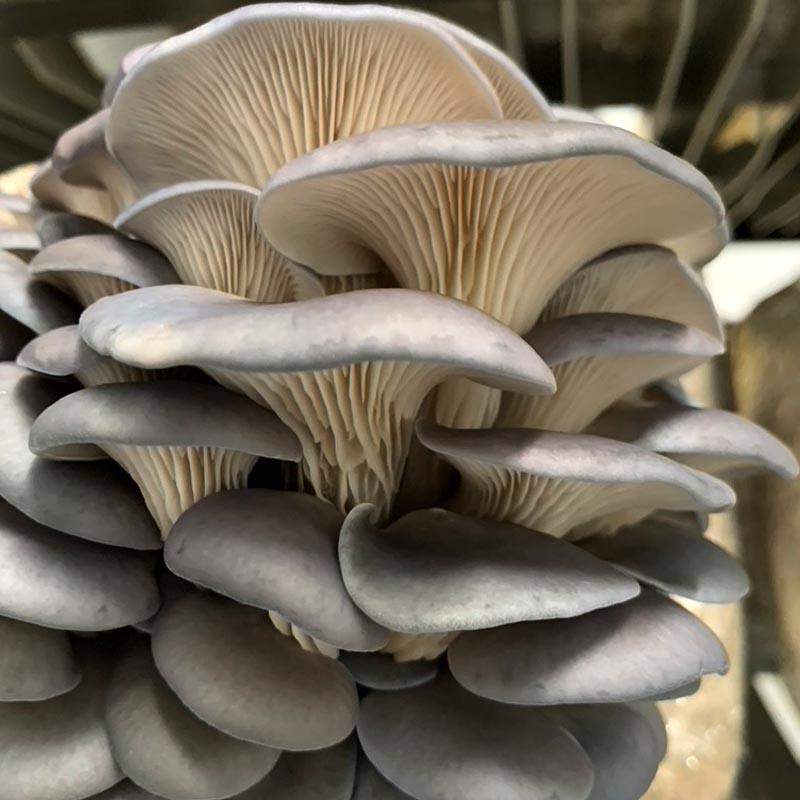
Cultivation Guide
Oyster Mushroom Cultivation
Pleurotus species · Grower guide by ANANDPRABHA AGRO LLP
Oyster mushrooms (Pleurotus species) are widely cultivated because they are easy to grow and highly adaptable. They can grow well at temperatures between 12°C and 28°C.
Introduction
Easy to grow, economical, and sustainable
A major advantage of oyster mushroom cultivation is the ability to grow on a wide range of agricultural and organic waste materials, making it economical and environmentally sustainable.
This guide is educational and reflects standard cultivation practice. Farm conditions vary — contact us for site-specific training, spawn supply, or grower kits.
Quick Facts
Oyster mushroom at a glance
12°C – 28°C
Ideal temperature range
Pleurotus spp.
Species
Waste-based
Substrate type
5 stages
Cultivation process
Process Overview
Five main steps in cultivation
Substrates
Compatible agricultural waste materials
Oyster mushrooms can be cultivated on a wide variety of agro-waste substrates — one of the key reasons this crop is economically accessible and environmentally valuable.
Step 1
Preparation of Substrate
Chopped paddy straw is one of the most commonly used substrates for cultivation. The substrate is usually filled into polypropylene (PP) bags.
- Straw is soaked in clean water to maintain a moisture content ideal for mycelial growth.
- Soaking also helps remove surface contaminants and impurities from the straw.
Key material
Polypropylene (PP) bags
PP bags are the standard container for oyster mushroom cultivation. They withstand pasteurization temperatures and provide an enclosed environment for mycelium colonisation.
Step 2
Substrate treatment methods
Treating the substrate eliminates competing organisms before inoculation. Two main methods are used depending on equipment availability and scale.
Hot Water Pasteurization
Dry substrate material is immersed in hot water. Chopped dry straw can be placed directly in hot water without prior soaking. Continuous heating should be maintained throughout the process to ensure proper disinfection.
Autoclave Sterilization
The straw is soaked in water and then dried under sunlight. The substrate is filled into polypropylene (PP) bags. A PVC ring is fixed at the mouth of the bag and plugged with non-absorbent cotton. The bags are sterilized in an autoclave. Sterilization time may vary depending on the quantity of substrate in each bag.
Step 3
Bag Filling
The pasteurized substrate is filled into bags and spawning is done simultaneously inside the inoculation chamber. The mouth of the bag is then plugged with non-absorbent cotton and kept for spawn running.
Steps 4 & 5
Cultivation stages
Once bags are filled and sealed, the crop progresses through three distinct stages before harvest.
Stage 1: Spawning
In pasteurized straw substrate, spawning is generally done by the layer spawning method. In sterilized substrate, spawn is added on the top surface and mixed gradually after closing the bag.
Stage 2: Spawn Running
After spawning, the polythene bags are closed with non-absorbent cotton plugs fitted in PVC necks. The bags are maintained at the right temperature. Watering and light are not required during this stage.
Stage 3: Cropping
The bags are transferred to the cropping room. The cotton plug and PVC ring are removed, and small slits are made on all sides of the bag for fructification.
Harvest
Harvesting
Harvesting is done by gently twisting and plucking the stalk. This helps avoid leaving behind torn stalk tissue or substrate debris that could harbour contaminants and reduce yield in subsequent flushes.
Good harvesting practice
- Harvest before cap edges fully curl upward for best quality.
- Twist and pluck gently to keep the substrate intact.
- Clean the harvest site to prevent contamination in the next flush.
- Multiple flushes are possible with proper care.
Ready to start growing?
Get the spawn, kits, and training you need
Anandprabha Agro LLP supplies scientifically produced oyster mushroom spawn (ICAR–IIHR incubatee), ready-to-grow kits, and hands-on cultivation training — online or offline.